Hidden Fees to Look Out for in Wedding Venues Before You Book
October 8, 2026 · Budgeting
Spot hidden wedding venue fees before booking: service charges, minimums, corkage, overtime, staffing, cleanup, deposits, and contract questions.
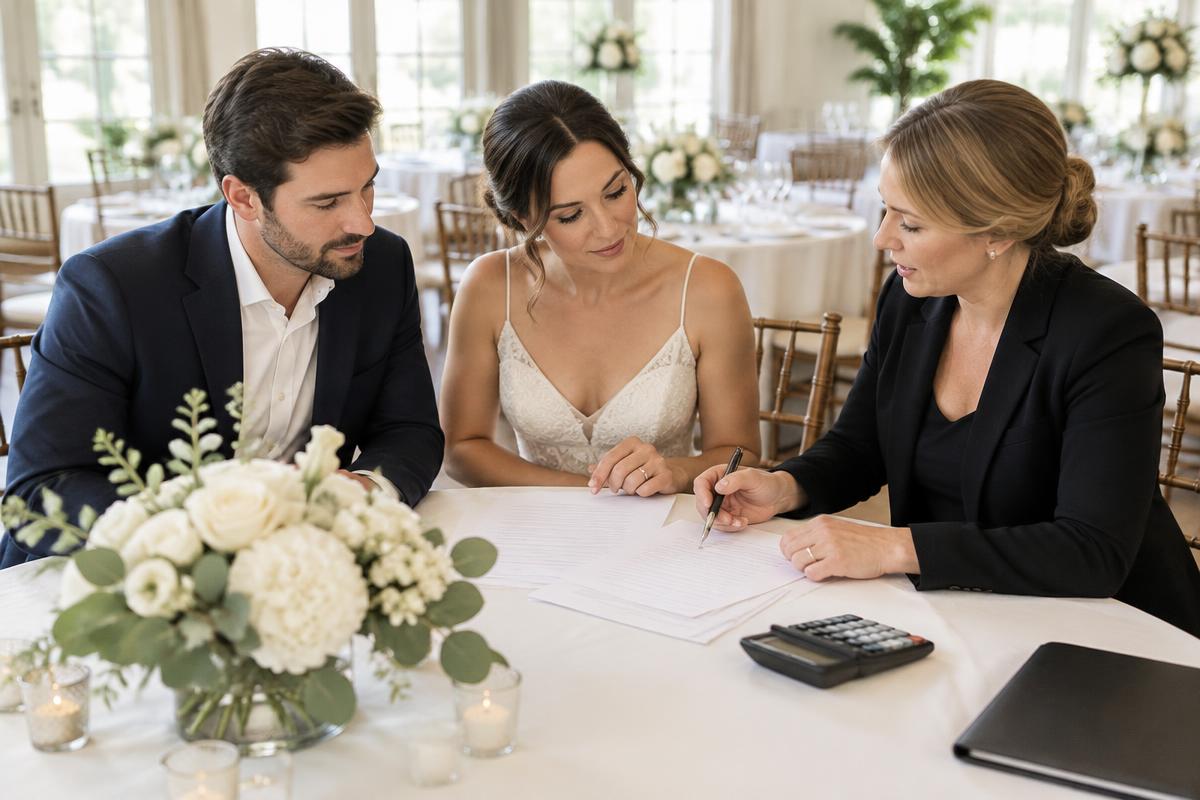
The venue tour felt perfect. The room had the right light, the coordinator was kind, and the starting price seemed manageable. Then a proposal arrived with service charges, staffing, and a minimum spend you had not understood.
The hidden fees to look out for in wedding venues are not always secret. Often they appear in a contract attachment, a separate catering document, or a phrase such as “additional charges may apply.” The goal is not to assume every venue is unfair. It is to make the complete payable total visible before you sign.
Use this guide as a quote-review checklist. Fee structures and legal treatment vary by venue and jurisdiction; the invented dollar examples explain the arithmetic rather than describe universal prices.
Start by defining what the venue price includes
Ask whether the quoted number buys room access, a full reception package, or a minimum food and beverage commitment. Those are different arrangements.
Request a written list of inclusions and exclusions for your guest count, date, and event hours. A brochure's “from” price may describe a different day or smaller event. Ask which document controls if a brochure and contract disagree.
Venue-only does not always mean a lower total
A site rental can leave you responsible for tables, chairs, linens, kitchen equipment, restrooms, security, cleaning, and staffing. An inclusive venue may charge more upfront but provide some of those items.
Read our all-inclusive versus DIY venue comparison to compare like-for-like plans rather than headline prices.
Service charges, gratuities, and taxes
A service charge is not automatically a tip paid to staff. Its purpose and distribution depend on the contract and applicable rules. Ask whether gratuity is included, optional, expected, or mandatory, and whether any charge is taxed.
Do not add a generic tax percentage from the internet. Ask the venue to show the calculation for its location and your package, including the taxable base for each charge.
A realistic-looking quote can still be incomplete
This example uses invented U.S.-dollar amounts and rates, not standard venue fees or tax advice:
| Item | Example calculation | Amount |
|---|---|---|
| Venue rental | Fixed amount | $3,000 |
| Food and drink | 80 guests × $70 | $5,600 |
| Contract service charge | 20% of food and drink only | $1,120 |
| Staffing not included above | Quoted separately | $500 |
| Cleanup | Quoted separately | $250 |
| Subtotal before taxes or other applicable costs | $10,470 |
The attractive $3,000 venue number is not the reception total. In your actual proposal, confirm whether staffing and cleaning are already covered so you do not count them twice.
Minimum spending commitments
A food and beverage minimum can mean you owe a stated amount even when fewer people attend. Ask which purchases count toward it. Taxes, service charges, room rental, and outside-vendor payments may not qualify.
Our food and beverage minimum guide explains the calculation. Get the treatment of a shortfall in writing: can it become upgraded food or drinks, or is it simply an additional payment?
Confirm when the guest count becomes final
Ask when you must guarantee attendance, whether the count can decrease afterward, and how additional guests are priced. Check treatment of children, vendors, and guests who attend only part of the event.
A per-person quote without its counting rules is not enough to forecast the invoice.
Outside vendors, corkage, and cake service
Some venues restrict outside catering, alcohol, or other suppliers. A preferred list may be a recommendation or a contractual requirement; clarify which it is.
Ask about the following rather than assuming each applies:
- Outside caterer access or kitchen fees.
- Corkage charges and approved alcohol service.
- Cake cutting, plating, or dessert service.
- Outside photographer or entertainment access.
- Furniture or decor installation requirements.
- Vendor insurance and certificate obligations.
If you plan to bring your own alcohol, compare the complete bar cost. Our corkage and BYO alcohol guide helps separate drink purchases from service and venue charges.
Time limits can turn into expensive extras
Ask for exact access times for vendors, not just guest arrival and departure. Decor installation, sound checks, catering preparation, and cleanup all need space in the schedule.
Separate reception overtime from breakdown overtime
A late dance floor and a late rental collection are different events. Ask whether each triggers a charge, who authorizes an extension, and whether costs rise after a specified hour.
Keep the timeline realistic. If your decorator needs three hours but the room is available one hour before guests arrive, a paid access extension might be necessary rather than optional.
Practical charges outside the main proposal
Parking, valet service, security, coat check, heating, cooling, power, and restroom support can appear on separate pages. Outdoor venues may need a hired weather backup. Ask whether mandatory staff levels change with guest count or alcohol service.
Check refundable damage deposits separately from actual fees. A refundable amount still affects cash flow before the wedding. Ask when it is returned, what deductions are permitted, and whether your liability is capped by that deposit or extends beyond it.
Read cancellation and rescheduling terms before paying
Identify which payments are nonrefundable, the cancellation deadlines, and whether changing the date creates new charges. Ask how closures, unsafe conditions, or supplier failures are handled. These terms are contract- and jurisdiction-specific; get qualified advice for unclear or substantial commitments.
Insurance may cover certain losses, but it does not make every cancellation refundable. See our wedding event insurance guide before relying on that assumption.
Ask for one complete written total
Send a clear request: “Please show the full estimated amount for our date, guest count, timeline, and selected services, including mandatory fees and taxes, and identify anything still subject to change.”
Save the response alongside the contract. Enter known extras in your weddingcost.co budget plan rather than hiding them inside contingency. A buffer should cover uncertainty, not fees you already know are coming.
You are not being difficult by asking these questions. You are making a meaningful commitment, and a clear quote helps both you and the venue start the relationship well.
Further reading
The Knot's destination wedding comparison illustrates why package scope matters when comparing locations. For your own booking, the signed venue and catering documents remain the decisive sources for fees and obligations.